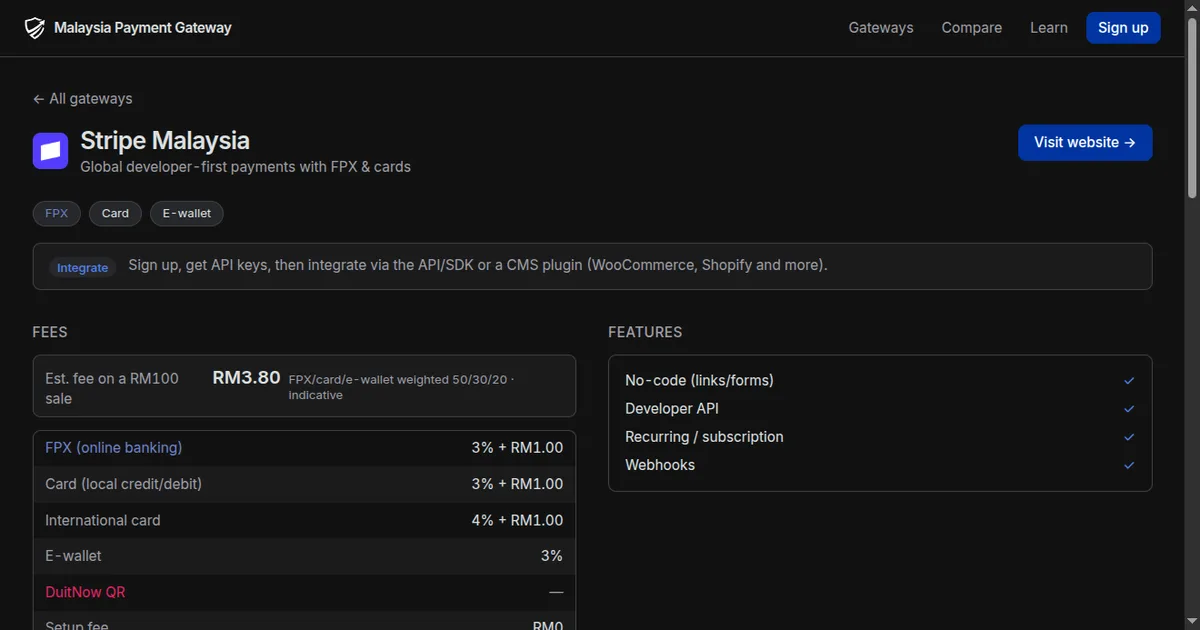
Stripe is the default answer in global dev communities, so Malaysian founders are often surprised by the local math: 3% + RM1.00 on a domestic FPX payment that a local gateway would process for RM1.00 flat. Here is the honest breakdown of what Stripe costs in Malaysia and when the premium earns its keep.
The Malaysian rate card
- Domestic cards: 3% + RM1.00.
- FPX: also 3% + RM1.00, unusual because FPX is a bank transfer and local gateways price it as one.
- International cards: add 1%, so about 4% + RM1.00, plus 2% if currency conversion is involved.
- GrabPay: 3%. Alipay: 2.9% + RM1.00.
- DuitNow QR: not offered.
- Setup and monthly: RM0, with a minimum charge of RM2 per transaction.
- Settlement: T+7, the slowest among ranked gateways in the directory.
On a RM100 basket that blends out to roughly RM4 per sale, which is why Stripe sits near the bottom of the cheapest-gateway ranking despite publishing impeccably transparent pricing.
What you are actually paying for
The premium buys real things; the question is whether your business uses them.
Stripe Billing is the strongest recurring-payments product available to Malaysian merchants: proration, dunning, metered billing, customer portal, all first-party. If subscriptions are your model, compare it against the shorter list of recurring-capable gateways before assuming a local option covers you.
The API surface is still the industry reference: webhooks, test clocks, excellent docs and an official MCP server for AI-agent integrations. And for cross-border sales, multi-currency support plus international card acceptance is where the extra 1% to 3% replaces an entire FX workflow.
When a local gateway wins
If most of your customers pay by FPX or DuitNow QR in ringgit, the comparison is not close: flat-fee locals process the same payment for a fraction of the cost and settle days earlier. See how the numbers land in Stripe vs toyyibPay and HitPay vs Stripe, or test your own basket in the fee calculator. Full profile: Stripe Malaysia.