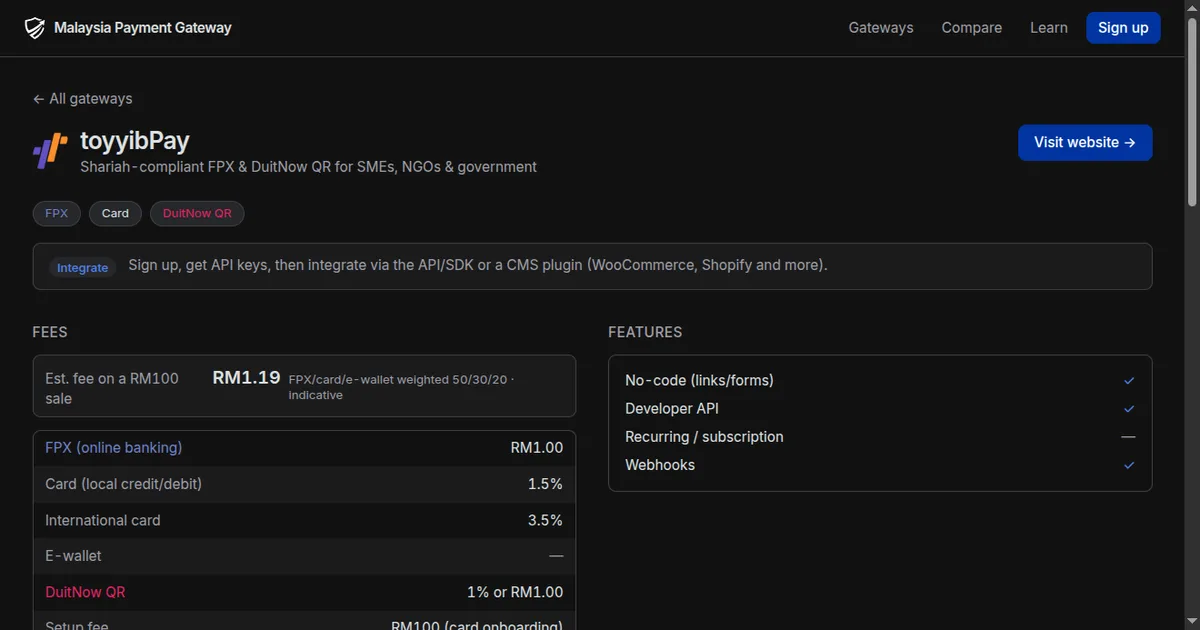
toyyibPay is the gateway Malaysians recommend when someone asks “apa yang paling murah untuk FPX?”, and the answer has stayed the same for years: a flat RM1.00 per B2C FPX transaction, no matter the amount. Since the 2026 rate card refresh it also publishes card and DuitNow QR pricing, so the full picture is finally comparable.
The full official rate card
- FPX (B2C): RM1.00 flat. FPX (B2B): RM2.00 flat.
- Local cards: 1.5%, running through toyyibPay Partners, with an RM100 onboarding fee and RM100 per year from year two.
- Foreign cards: 3.5%.
- DuitNow QR: 1% or RM1.00 per transaction.
- E-wallets: not offered as a channel.
- Registered non-profits can apply for the free Santai plan, which waives the B2C FPX fee in exchange for slower settlement.
All published rates exclude SST. On a RM100 basket the blended estimate makes toyyibPay one of the cheapest ranked gateways in the directory; the exact figure renders live in the box above.
Why flat pricing matters (and when it hurts)
A flat fee means your cost per sale never grows with the ticket. RM1.00 on a RM250 course registration is 0.4%, a rate no percentage-based gateway can touch. That is why schools, NGOs, government agencies and SME sellers with mid-size tickets dominate toyyibPay’s user base.
The same math punishes micro-tickets. RM1.00 on a RM10 sale is 10%. If your average order is small, a percentage-based rival like HitPay or a DuitNow QR-first setup will beat it; run your real numbers through the fee calculator.
What you give up
toyyibPay is FPX-first by design. There is no e-wallet channel, no card-on-file recurring billing, and settlement is quoted as 1 to 4 business days for FPX rather than a guaranteed next-day payout. Card acceptance exists but sits behind an onboarding fee, which only makes sense once card volume is real.
If those trade-offs matter, the closest comparison is Billplz vs toyyibPay: Billplz charges RM0.25 more per FPX transaction on the free plans but pays out next-business-day, guaranteed. The full profile lives at toyyibPay.